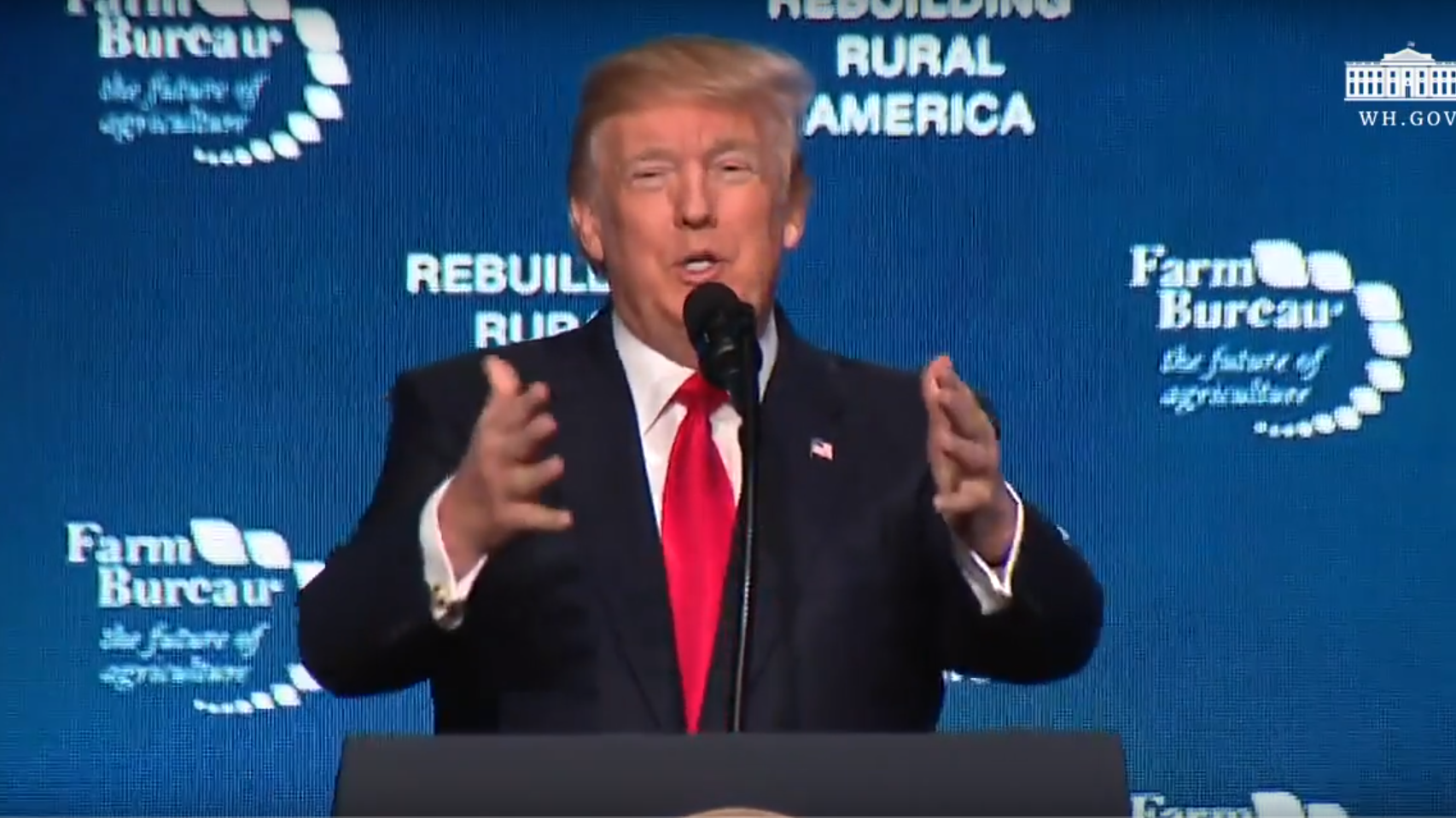
A long-building “chaos” narrative being pushed by President Donald Trump suggests that the election is fatally flawed, fraud is rampant, and no institutions other than Trump himself can be trusted. There is no evidence for any of that, and as the election math increasingly turns against him, the actual election systems around America continue functioning well.
Nothing about the 2020 elections is normal, of course, because nothing about 2020 is normal. The fact that the vote count is slower than usual is unavoidably stressful—but it’s also exactly what officials and experts have said for months would happen as every vote is counted.
“I think how the election process has played out has been remarkable,” says David Levine, the elections integrity fellow at the Alliance for Securing Democracy. “I think the entire country owes a tremendous gratitude to state and local election officials and those that have worked closely with them against the backdrop of foreign interference, coronavirus pandemic, civil unrest, and frankly inadequate support from the federal government. We have an election that has gone reasonably well.”
By any measure, the 2020 election scores better than any in recent history on security, integrity, and turnout. Election infrastructure is more secure: the Department of Homeland Security installed Albert sensors in election systems, which warn officials of intrusion by hackers, and the National Security Agency has been aggressively hunting hacking groups and handing intelligence to officials around the country. Election officials have invested in paper backup systems so they can more easily recover from technical problems.
The pandemic itself is one reason for these improvements. The increase in mail-in and early voting meant that ballots were cast over a month-long period. That helps security because activity isn’t all focused on a single day, said a CISA official in a press briefing. It gives election officials more time to deal with both normal mistakes and malicious attacks, and any problems that do arise affect fewer voters. And more Americans will want to vote this way in the future, said Benjamin Hovland, the top federal elections official and a Trump appointee.
That means the pandemic that many feared would wreck the election has paradoxically made the system stronger. “All of that uncertainty resulted in tremendous scrutiny and transparency, and most importantly, public education about all of these administrative processes,” says Eddie Perez, an elections expert at the Open Source Election Technology Institute.
The calls from the president and his allies to stop vote counts can still undermine confidence in the outcome. But so far, few of Trump’s arguments have carried any weight in court. Judges denied or threw out lawsuits in Georgia and Michigan on Thursday. Even calls for recounts look unconvincing right now. Historically, recounts matter when races are within just a few hundred votes in a single state, as in the 2000 election. Right now, all of the half-dozen contested states have margins much bigger than that.
And while the president’s family and allies have been attacking fellow Republicans for not sufficiently supporting his efforts, several prominent party members have publicly rebuked him for his impatience, including Mitch McConnell, the Senate majority leader. “All things considered, I think that the media and the public are doing a better than average job at remaining patient and resisting inflammatory rhetoric,” says Perez.
“This election is going remarkably well considering the obstacles election officials have faced all year long,” says Mark Lindeman, co-director of the election integrity organization Verified Voting. “Election officials in many states have had to field two entirely new election systems: massive-scale mail ballots where they have handled only a handful in the past, and also reengineering in-person voting to accommodate social distancing. There’s a chaos narrative, but what I see is not chaos. What I see is people working very hard to finish a difficult job.”
On Thursday evening, Trump gave a rambling news conference in which he repeated his many unsubstantiated claims about fraud. Most of the news networks cut away after a minute or two. Even Fox News’s anchors said afterwards that they “hadn’t seen the evidence” for Trump’s claims. The president seemed, they said, to be readying for Biden to be declared the winner—but then to start mounting legal challenges. The counting may be over soon, but the election is far from finished.
So Election Day is over, but the election continues.
The world’s attention has turned to a set of swing states still counting important mail-in votes, particularly Pennsylvania. So what exactly is happening today? How are counts happening? Is the election fair and secure?
“I urge everyone to remain patient,” Pennsylvania Secretary of State Kathy Boockvar said in a press conference today, “We are going to accurately count every single ballot.”
“The vote count, as I’ve said many times, is never done on the day of election night. The counties are doing this accurately as quickly as they possibly can.”
Across the state, mail-in ballots postmarked on or before Election Day are still arriving—don’t forget there have been significant postal delays—and so counting continues. The Republican state legislature declined to change Pennsylvania law, which meant that processing of over 2.5 million mail-in votes could only begin on Tuesday morning, while other states started the process much earlier. So the processing starts later, the counting starts later, and the work is greater for mail-in ballots.
“The practical labor associated with mail-in ballots has more steps than in-person voting,” said Eddie Perez, a Texas-based election administration expert with the nonpartisan OSET Institute. But, he added, “Both in human and technology features, there’s a lot of safeguards for mail-in ballots.”
Here’s a concise but thorough rundown of the counting, security, and integrity process right now in Pennsylvania:
Ballots and envelopes were sent out only to registered and verified voters who requested them.
Election officials receive the ballot and envelope within three days of Election Day—although this deadline may be challenged by Republicans.
Officials verify that each ballot is associated with the exact, eligible voter on the rolls.
Ballots are validated with voter records in exactly the same way as in-person votes.
To prevent fraud, each ballot and envelope has computer-readable codes and exact physical features like style, size, weight, and design that allow the computers to identify which specific elections, precincts, content, and additional validation information the vote applies to.
Signatures on the ballot envelopes are matched against a central database by bipartisan teams.
Envelopes are opened and paperwork removed in a specific and legally-mandated procedure.
Ballots that fail to pass these security measures are sent for further investigation, or for follow-up with the voter.
Decades of history, independent study, and these extra security steps explain why mail-in ballots are not easily susceptible to fraud, and why attempts to paint them as frail are baseless disinformation, a false narrative propagated first and foremost by the president of the United States. In decades of increasing mail-in voting around the United States, widespread fraud is nonexistent.
The Trump campaign, having now lost in the key swing state of Wisconsin, has said it will sue in Michigan and Pennsylvania to stop the ongoing counting of ballots, while falsely claiming victory despite many votes still remaining uncounted. Votes counted earlier in the process favor Trump, while the mail-in votes from Democratic areas that are still being counted are expected to favor Biden.
The counting in Pennsylvania could carry on through Friday.
There is one more scenario to address. Pennsylvania automatically recounts votes if the result is within 0.5%. A loser can request and pay for a recount by going to court and alleging errors in the vote count.
So far there is no reason to believe any such errors have occurred but, as has been said so many times, there is still a long way to go in Pennsylvania—and that means there may still be a long way to go for everyone.
The election results will start to come in as early as 7pm Eastern Time on Tuesday, when seven states begin closing the polls. The next few hours will see more polls close around the country, more votes processed, more counts updated. But we won’t have the final result that night.
This isn’t unusual: In the US, counting votes and officially certifying them always goes on longer than Election Day, and the coronavirus means the counting will probably take longer than that. But on Sunday, Axios reported that President Trump intends to prematurely declare victory if it looks like he’s leading in the early returns, even if there are still millions of votes left to be counted. He has denied this specific claim, but it is in line with his long campaign to undermine the legitimacy of the election, and matches his promise to use lawyers to stop ballot counting in Pennsylvania as soon as polls close—even though the state will still have many mail-in ballots left to count and report.
So what exactly will happen if a candidate prematurely declares victory before the contest is truly over?
Social media
This the front line. Any premature declaration will likely hit American networks like Twitter, Facebook, and YouTube first, so the way these platforms handle this kind of activity will inform what happens next. Those three sites are planning to use labeling to deal with this kind of disinformation.
Twitter, the president’s social media platform of choice, says it will prominently label misleading tweets about election results from candidates, as well as any viral tweet. Disputed announcements will be met with a label that says “Official sources may not have called the race when this was Tweeted.”
To confirm results, the company will be leaning on state and local election officials as well as major national news outlets with dedicated election coverage desks. At least two sources will have to confirm the results of a race before a candidate can tweet about results without a warning label being applied.
YouTube, which has been a top campaign advertising battleground, will place an information panel on videos prematurely declaring victory. That will link to Google’s election results feature, which is being produced in partnership with the Associated Press.
“We’ll also continue to raise up authoritative content from news organizations and reduce the spread of borderline election misinformation,” said Google spokesperson Ivy Choi. “Additionally, if a piece of content, in the course of prematurely declaring victory, misleads viewers about voting or encourages interference in democratic processes, we will remove that in accordance with our community guidelines.”
When the polls close, all Google’s ad platforms—including YouTube and its search engine—will pause ads that reference the 2020 election. That may cut off another potential avenue for disinformation across the company’s internet empire.
Facebook is placing its own hopes in labels as well, including a preemptive notification in news feeds to follow authoritative news outlets like Reuters and the Associated Press for election results. Facebook’s normal response to false news is to reduce its spread on the network and partner with fact-checkers for additional labeling.
Elsewhere, TikTok’s policy reduces the visibility of posts prematurely claiming victory and is working on an “expedited” schedule with fact checking partners around Election Day.
With an unprecedented number of Americans voting by mail this year, it may take longer than normal for results to come in this Election Day—including even unofficial results. Yet President Donald Trump’s disinformation campaign about election security continues to falsely suggest that any “delay” would be the result of fraud.
But government officials charged with protecting the election made it clear that slower-than-usual results should be totally expected.
“We are likely to see delays in the processing of the election,” says Brandon Wales, the executive director at the Cybersecurity and Infrastructure Security Agency, or CISA. “The truth is that nothing about this process changes when the election will be officially done.”
We may not have results on election night… [but] it doesn’t mean the process has been compromised, it means the system is working.”
“Everything you hear on election day has always been unofficial results,” he adds. “The vote isn’t done until the election is certified by that state’s chief election official, which often comes several weeks after the election. Even the unofficial results might not be available on election night in some places, including in crucial swing states, so we may not have results on election night. We encourage people to not be concerned about that. That is normal. It doesn’t mean the process has been compromised, it means the system is working. Local and state officials are professionals. Let them do their jobs.”
The Election Project, a running tally of early voting activity, shows that over 2.5 million Americans have already returned mail in ballots. Counting them can take longer than in-person votes because of security measures like verifying signatures and processing the outer and secrecy envelopes. Add to that the fact that counting often starts late and it can push back the expected timeline for results. Mail ballots are still secure and fraud is extremely rare, contrary to the president repeatedly lying about the subject.
But we’re not out of the woods yet
If America doesn’t get results on election day, a storm of disinformation is likely to be kicked up in an attempt to undermine the legitimacy of the vote. Federal officials, like Wales, have said that foreign actors like Russia could insert extra chaos at a delicate time for American democracy.
“I think our role is, first, trying to correct election disinformation,” Wales said.
In one recent example, a Russian news site reported that a Michigan voter database was hacked, and news began to spread quickly. CISA—and journalists—corrected the record: All the information that had been apparently “stolen” was actually already publicly available, like most state voter rolls are. There was in fact, no compromise of the system, despite word of an attack spreading like a small wildfire.
On Election Day, though, the threat is a much bigger blaze.
While the threat of foreign disinformation is serious, it’s also simpler to deal with than the almost-guaranteed domestic disinformation. The president has effectively promised that he will claim the election is stolen if he is losing or if results are not immediately reported.
What is the playbook for Wales when the malicious actor is American rather than foreign?
“There certainly is a difference in what the United States government can do because under the First Amendment people have freedom of speech,” he said. “Social media companies can take action under their terms of service. CISA’s role doesn’t change. Our role is to get to the American people and provide them the right way to evaluate information they’re seeing. Ultimately we can do that whether disinformation comes from foreign or domestic sources.”
CISA’s plan, whether disinformation comes from abroad or home, is to point Americans to trusted sources.
“In almost all cases,” Wales explains, “that’s likely to be state and local election officials who are the professionals who run these elections and who have a vested interest in making sure votes are counted correctly.”
from MIT Technology Review https://ift.tt/3nAJLtg
via IFTTT
California Governor Gavin Newsom made a bold attempt today to ban sales of new gas-guzzling cars and trucks, marking a critical step in the state’s quest to become carbon neutral by 2045. But the effort to clean up the state’s largest source of climate emissions is almost certain to face serious legal challenges, particularly if President Donald Trump is re-elected in November.
Newsom issued an executive order that directs state agencies, including the California Air Resources Board, to develop regulations requiring every new passenger car and truck sold in the state to be zero-emissions vehicles by 2035. That pretty much limits future sales to electric vehicles (EVs) powered by batteries or hydrogen fuel cells. Similar rules would go into effect for most medium and heavy-duty vehicles by 2045.
If those rules are enacted, the roughly 2 million new vehicles sold in the state each year will all suddenly be EVs, providing a huge boost to the still nascent sector.
“California policy, especially automotive policy, has cascading effects across the US and even internationally, just because of the scale of our market,” says Alissa Kendall, professor of civil and environmental engineering at the University of California, Davis.
Indeed, the order would mean more auto companies will produce more EV lines, scaling up manufacturing and driving down costs. The growing market would, in turn, create greater incentives to build out the charging or hydrogen fueling infrastructure necessary to support it all.
The move also could make a big dent in transportation emissions. Passenger and heavy-duty vehicles together account for more than 35% of the state’s climate pollution, which has proven an especially tricky share to reduce in a sprawling state of car loving-residents (indeed, California’s vehicle emissions have been ticking up).
But Newsom’s executive order only goes so far. It doesn’t address planes, trains, or ships, and it could take another couple decades for residents to stop driving all the gas-powered vehicles already on the road.
Whether the rules go into effect at all, and to what degree, will depend on many variables, including what legal grounds the Air Resources Board uses to justify the policies, says Danny Cullenward, a lecturer at Stanford’s law school focused on environmental policy.
One likely route is for the board to base the new regulations on tailpipe emissions standards, which California has used in the past to force automakers to produce more fuel-efficient vehicles, and nudge national standards forward. But that approach may require obtaining a new waiver from the Environmental Protection Agency allowing the state to exceed the federal government’s vehicle emissions rules under the Clean Air Act, the source of an already heated battle between the state and the Trump administration.
Last year, Trump announced he would revoke California’s earlier waiver to set tighter standards, prompting the state and New York to sue. So whether California can pursue this route could depend on how courts view the issue and who is sitting in the White House come late January.
It’s very likely that the automotive industry will challenge the rules no matter how the state goes about drafting them. And the outcome of those cases could depend on which court it lands in—and, perhaps eventually, who is sitting on the Supreme Court.
But whatever legal hurdles it may face, California and other states need to rapidly cut auto emissions to have any hope of combating the rising threat of climate change, says Dave Weiskopf, senior policy advisor with NextGen Policy in Sacramento.
“This is what science requires and it’s the next logical step for state policy,” he says.
from MIT Technology Review https://ift.tt/2G4b5Pr
via IFTTT
Twitter is perfect as a megaphone for the far right: its trending topics are easy to game, journalists spend way too much time on the site, and—if you’re lucky—the President of the United States might retweet you.
QAnon, the continuously evolving pro-Trump conspiracy theory, is good at Twitter in the same way as other successful internet-native ideologies—using the platform to manipulate information, attention and distribution all at the same time. On Tuesday, Twitter took a step aimed at limiting how successful QAnon can be there, including taking down about 7,000 accounts that promote the conspiracy, designating QAnon as “coordinated harmful activity,” and preventing related terms from showing up in trending and search results.
“We will permanently suspend accounts Tweeting about these topics that we know are engaged in violations of our multi-account policy, coordinating abuse around individual victims, or are attempting to evade a previous suspension,” Twitter announced. The company added that they’d seen an increase in those activities in recent weeks.
The New York Times reported that Facebook was planning to “take similar steps to limit the reach of QAnon content on its platform” next month, citing two employees of the company who spoke anonymously. On Friday, TikTok blocked several hashtags related to QAnon from search results.
This most recent push to limit QAnon’s reach follows two high-profile campaigns driven by QAnon. First American model and celebrity Chrissy Teigen, who has more than 13 million followers on Twitter, was the target of an intense harassment campaign, then more recently, QAnon accounts were instrumental in spreading a bogus human trafficking conspiracy theory about the furniture marketplace Wayfair. The claims spread from Twitter’s trending bar to Instagram and TikTok accounts promoting the conspiracy theory to their followers.
“That activity has raised the profile of the very long-standing problem of coordinated brigading. That kind of mass harassment has a significant impact on people’s lives,” said Renee DiResta, research manager at the Stanford Internet Observatory and an expert in online disinformation.
But Twitter proficiency is only one small part of why QAnon wields influence, and just one example of how platforms amplify fringe beliefs and harmful activity. To actually stop QAnon, experts say, would take a lot more work and coordination. That is, if it’s even possible.
An omniconspiracy
QAnon was born in late 2017 after a quip President Donald Trump made in a press conference about a “calm before the storm” spawned a series of mysterious posts on 4chan attributed to “Q,” predicting the coming arrest of Hillary Clinton. Although that didn’t happen, “Q” continued to post, claiming to know all about a secret plan led by Trump to arrest his enemies.
“QAnon has its origin in a multiplatform conversation that started off on social media, in a pseudonymous environment, where there’s no consequence for speech,” says Brian Friedberg, a senior researcher at the Harvard Shorenstein Center’s Technology and Social Change Project. The posts have moved from one site to another following bans, and now appear on a messageboard called 8kun.
The posts have attracted followers who spend their time interpreting these messages, drawing conclusions, and leading campaigns to make the messages more visible. Some QAnon adherents have led coordinated harassment campaigns against journalists, rival online communities, celebrities, and liberal politicians. Others have shown up at Trump rallies wearing “Q” themed merchandise. The president has retweeted Q or conspiracy theory-related Twitter accounts dozens of times, although it’s an open question how aware he is of what Q is, beyond a movement that supports his presidency on the internet. And there have been multiple incidents of real-life violence linked to QAnon supporters.
The traditional understanding of QAnon was that its ideas are spread by a relatively small number of adherents who are extremely good at manipulating social media for maximum visibility. But the pandemic made that more complicated, as QAnon began merging more profoundly with health misinformation spaces, and rapidly growing its presence on Facebook.
At this point, QAnon has become an omniconspiracy theory, says DiResta—it’s no longer just about some message board posts, but instead a broad movement promoting many different, linked ideas. Researchers know that belief in one conspiracy theory can lead to acceptance of others, and powerful social media recommendation algorithms have essentially turbocharged that process. For instance, DiResta says, research has shown that members of anti-vaccine Facebook groups were seeing recommendations for groups that promoted the Pizzagate conspiracy theory back in 2016.
“The recommendation algorithm appears to have recognized a correlation between users who shared a conviction that the government was concealing a secret truth. The specifics of the secret truth varied,” she says.
Researchers have known for years that different platforms play different roles in coordinated campaigns. People will coordinate in a chat app, message board, or private Facebook group, target their messages (including harassment and abuse) on Twitter, and host videos about the entire thing on YouTube.
In this information ecosystem Twitter functions more like a marketing campaign for QAnon, where content is created to be seen and interacted with by outsiders, while Facebook is a powerhouse for coordination, especially in closed groups.
“Q” has made many incorrect predictions, and continues to advance the belief that there is a ‘deep state’ plot against Donald Trump.
Reddit used to be a mainstream hub of QAnon activity, until the site started clamping down on it in 2018 for inciting violence and repeated violations of its terms of service. But instead of diminishing its power, QAnon simply shifted to other mainstream social media platforms where they were less likely to be banned.
This all means that when a platform acts on its own to block or reduce the impact of QAnon, it only attacks one part of the problem.
Friedberg said that, to him, it feels as if social media platforms were “waiting for an act of mass violence in order to coordinate” a more aggressive deplatforming effort. But the potential harm of QAnon is already obvious if you stop viewing it as a pro-Trump curiosity and instead see it for what it is: “a distribution mechanism for disinformation of every variety,” Friedberg said, one that adherents are willing to openly promote and identify with, no matter the consequences.
“People can be deprogrammed”
Steven Hassan, a mental health counselor and an expert on cults who escaped from Sun Myung Moon’s Unification Church, known as the “Moonies”, says that discussing groups like QAnon as solely a misinformation or algorithmic problem is not enough.
“I look at QAnon as a cult,” Hassan says. “When you get recruited into a mind control cult, and get indoctrinated into a new belief system…a lot of it is motivated by fear.”
“They’ve had three years of almost unfettered access to develop and expand.”
“People can be deprogrammed from this,” Hassan says. “But the people who are going to be most successful doing this are family members and friends.” People who are already close to a QAnon supporter could be trained to have “multiple interactions over time” with them, to pull them out.
If platforms wanted to seriously address ideologies like QAnon, they’d do much more than they are, he says.
First, Facebook would have to educate users not just on how to spot misinformation, but also how to understand when they are being manipulated by coordinated campaigns. Coordinated pushes on social media are a major factor in QAnon’s growing reach on mainstream platforms, as recently documented by the Guardian, over the past several months. The group has explicitly embraced “information warfare” as a tactic for gaining influence. In May, Facebook removed a small collection of QAnon-affiliated accounts for inauthentic behavior.
And second, Hassan recommends that platforms stop people from descending into algorithmic or recommendation tunnels related to QAnon, and instead feed them with content from people like him, who have survived and escaped from cults—especially from those who got sucked into and climbed out of QAnon.
Friedberg, who has deeply studied the movement, says he believes it is “absolutely” too late for mainstream social media platforms to stop QAnon, although there are some things they could do to, say, limit its adherents’ ability to evangelize on Twitter.
“They’ve had three years of almost unfettered access outside of certain platforms to develop and expand,” Friedberg says. Plus, QAnon supporters have an active relationship with the source of the conspiracy theory, who constantly posts new content to decipher and mentions the social media messages of Q supporters in his posts. Breaking QAnon’s influence would require breaking trust between “Q,” an anonymous figure with no defining characteristics, and their supporters. Considering “Q’s long track record of inaccurate predictions, that’s difficult, and, critical media coverage or deplatforming have yet to really do much on that front. If anything, they only fuel QAnon believers to assume they’re on to something.
The best ideas to limit QAnon would require drastic change and soul searching from the people who run the companies on whose platforms QAnon has thrived. But even this week’s announcements aren’t quite as dramatic as they might seem at first: Twitter clarified that it wouldn’t automatically apply its new policies against politicians who promote QAnon content, including several promoters who are running for office in the US.
And, Friedberg said, QAnon supporters were “poised to test these limitations, and already testing these limitations.” For instance, Twitter banned certain conspiracy-affiliated URLs from being shared, but people already have alternative ones to use.
In the end, actually doing something about that would require “rethinking the entire information ecosystem,” says Diresta. “And I mean that in a far broader sense than just reacting to one conspiracy faction.”
from MIT Technology Review https://ift.tt/2CRGsey
via IFTTT
Are you hiding from covid-19? I am. The reason is simple: the high chance of death from the virus.
I was reminded of the risk last week by this report from the New York City health department and Columbia University which estimated that on average, between March and May, the chance of dying if you get infected by SARS-CoV-2 was 1.45%.
That’s higher than your lifetime chance of getting killed in a car wreck. That’s every driver cutting you off, every corner taken too fast, every time you nearly dozed off on the highway, all crammed into one. That’s not a disease I want to get. For someone my mother’s age, the chance of death came to 13.83% but ranged as high as 17%. That’s roughly 1 in 6, or the chance you’ll lose at Russian roulette. That’s not a game I want my mother to play.
The rate at which people are dying from the coronavirus has been estimated many times and is calculated in different ways.For example, if you become an official covid-19 “case” on the government’s books, your death chance is more like 5%, because you’re sick enough to have sought out help and to have been tested.
But this study instead calculated the “infection fatality ratio,” or IFR. That’s the chance you die if infected at all. This is the real risk to keep in view. It includes people who are asymptomatic, get only a sniffle, or tough it out at home and never get tested.
Because we don’t know who those people who never got tested are, IFR figures are always an estimate, and the 1.45% figure calculated for New York is higher than most others, many of which fluctuate around 1%. That could be due to higher rates of diabetes and heart disease in the city, or to estimates used in the study.
It’s also true that your personal odds of dying from covid-19 will differ from the average. Location matters—cruise ship or city—and so do your sex, your age, and whether you have preexisting health conditions. If you’re in college, your death odds are probably lower by a factor of a hundred, though if you’re morbidly obese, they go back up. Poor health—cancer, clogged arteries—also steeply increase what scientists call the “odds ratio” of dying.
The biggest factor, though, is age. I looked at the actuarial tables, and the chance of death for a man in my age group (I’m 51) is around 0.4% per year from all causes. So if I get covid-19, my death chance is probably three times my annual all-cause annual risk (since I am a man, my covid-19 risk is higher than the average). Is that a chance I can live with? Maybe, but the problem is that I have to take that extra risk right now, all up front, not spread out over time where I can’t see or worry about it.
Tbh, these % don’t help me. More useful would be a list of comparable risks associated with common behaviours that I uncritically accept. Do you know of any examples?
On Twitter, some readers complained that average risks don’t tell them much about how to think or act. They have a point. What’s a real-life risk that’s similar to a 1.45% chance of dying? It wasn’t easy to think of one, since mathematically, you can’t encounter such a big risk very often. Skydiving, maybe? According to the US Parachute Association, there’s just one fatality for every 220,301 jumps. It would take 3,200 jumps to equal the average risk of death from covid.
Risk perceptions differ, but it’s the immense difference in IFR risk for the young (under 25) and the elderly (over 75) that really should complicate the reopening discussion. Judging from the New York data, Grandpa’s death chances from infection are 1,000 times that of Junior. So yes, we need schools to keep kids occupied, learning, and healthy. And for them, thank goodness, the chances of death are very low. But reopening schools and colleges has the ugly side effect that those with the lowest risk could be, in effect, putting a gun to the head of those with the highest (although there is still we do not know about how transmissible the virus is among children).
Decent odds
The virus is now spreading fast again in the US, after the country failed to settle on a strong mitigation plan. At the current rate of spread—40,000 confirmed cases a day (and maybe five to 10 times that in reality)—it’s only two years until most people in the US have been infected. It means we’re pointed toward what, since the outset, has been seen as the worst-case scenario: a couple of hundred million infected and a quarter-million deaths.
By now you might be wondering what your own death risk is. Online, you can find apps that will calculate it, like one at covid19survivalcalculator.com, which employs odds ratios from the World Health Organization. I gave it my age, gender, body mass index, and underlying conditions and learned that my overall death risk was a bit higher than the average. But the site also wanted to account for my chance of getting infected in the first place. After I told it I was social distancing and mostly wearing a mask, and my rural zip code, the gadget thought I had only a 5% of getting infected.
I clicked, the page paused, and the final answer appeared: “Survival Probability: 99.975%”.
Those are odds I can live with. And that’s why I am not leaving the house.
from MIT Technology Review https://ift.tt/3ivG1GX
via IFTTT
The news: Early on Monday, Reddit banned r/The_Donald, a once-notorious pro-Trump forum, for repeated rule-breaking. CEO Steve Huffman announced that it was just one of 2,000 subreddits banned by the site as it institutes rule changes designed to make the platform less accommodating to hateful and abusive communities.
The other news: Later in the day, livestreaming video service Twitch announced that it had temporarily suspended President Trump’s account for rebroadcasting comments about Mexican immigrants that broke its “hateful conduct and harassment policies.”
The other, other news: YouTube, meanwhile, followed by banning several far-right and racist creators, including white supremacists David Duke, Richard Spencer, and Stefan Molyneux.
Better late than never? Monday’s bans were preceded by policy changes at Twitter and Facebook that shifted, to a degree, how the platforms handle rule-breaking behavior by accounts linked to the president and the far right. r/The_Donald was once a core organizing point for the pro-Trump internet, with a record of bringing extremist content in front of bigger and bigger audiences. In late 2016, Huffman limited the reach of the subreddit after it figured out how to get the site’s algorithms to promote pro-Trump content. By then, r/The_Donald members were already involved in spreading the Pizzagate conspiracy theory, and volunteer moderators had asked Huffman to do more to fight the abuse and harassment their communities faced from r/The_Donald members.
But will it do anything? In reality, r/The_Donald had been nearly dormant for months, as the Washington Post noted—and most of the other banned subreddits were tiny or inactive. A few others were notable, however, including r/ChapoTrapHouse, associated with the left-wing podcast of the same name; and r/gendercritical, a “feminist” subreddit with more than 60,000 members that regularly promoted transphobic views.
This report is part of “The global AI agenda,” a thought leadership program by MIT Technology Review Insights examining how organizations are using AI today and planning to do so in the future. Featuring a global survey of 1,004 AI experts conducted in January and February 2020, it explores AI adoption, leading use cases, benefits, and challenges, and seeks to understand how organizations might share data with each other to develop new business models, products, and services in the years ahead.
The regional summary explores how executives in Latin America see AI: the opportunities, challenges, and the potential for data to be shared with third parties for mutual benefit. The main findings of the report are as follows:
Almost 80% of large Latin American businesses are using AI. As of 2019, four in five businesses in Latin America have launched AI initiatives. Early results show benefits, primarily to operational efficiency and management decision-making. By 2022, AI will be used across 21%-40% of business processes at two-thirds of organizations surveyed in the region. Latin America has a robust ecosystem of startups, yet a lack of talent and the high cost of technology remain obstacles to AI.
Future AI investments will target sales and marketing and logistics and supply chain. Over half of respondents (55%) cite customer service as their main AI application so far, and evidence across the region shows innovations like chat bots and AI-driven customer analytics in sectors including banking, air travel, transport, and e-commerce. By 2022, the number of companies using AI in sales and marketing and in logistics and supply chain will double. In three years, logistics and supply chain will be the region’s most widely applied AI use case.
Latin America’s AI ecosystem would benefit from greater policy continuity and regional collaboration. Many countries in the region have developed or are developing national AI plans, but political volatility is interrupting or limiting policy continuity. A second challenge is the region’s limited voice and participation in the development of global AI governance and ethics frameworks; experts are concerned that the dominance of other blocs, especially the EU, could result in frameworks that are harder for Latin American companies to adhere to.
In an advance towards conquering covid-19, doctors in Michigan say an antibody drug may sharply cut the chance patients on a ventilator will die.
The problem: The pandemic viral disease is infecting millions and for those who end up on a ventilator in an ICU, the odds are grim. More than half are dying.
The drug: Doctors at the University of Michigan set out to control the haywire immune reaction that pushes some covid-19 patients into a death spiral. To do it, they gave 78 patients on ventilators the drug tocilizumab, which blocks IL-6, a molecule in the body that sets off a reacting to an infection. (The drug is sold by Roche under the tradename Acterma.)
The result: The doctors say in a preprint that patients who got the drug were 45% less likely to die than those who didn’t. But there’s a big caveat to the result, which is that the doctors knew which patients got the drug, and which didn’t. Their picks could have been biased— people more likely to improve anyway, for example—so further studies are needed.
Emerging cocktail: In late May, Roche said it would start a trial to combine its IL-6 blocker combined with remdesivir, an antiviral drug with modest benefits that got emergency approval in the US for treating covid-19. That drug is meant to block the virus from replicating.
By combining the two drugs, doctors may be closing in on a cocktail able to cut the death rate from the virus, a step that would help society return to normal.
from MIT Technology Review https://ift.tt/2AByC7s
via IFTTT
Four years ago, a Breitbart writer famed for championing a harassment campaign targeting women in video games used his air time during a White House press briefing to blast Twitter. He was angry that he’d lost his verification badge, that little blue check mark, after the company said he had repeatedly violated the platform’s rules against inciting harassment. But he insisted that Twitter was actually punishing him for something else.
“It’s becoming very clear,” Milo Yiannopoulos told Josh Earnest, then the press secretary for the Obama administration, in March of 2016, “that Twitter and Facebook in particular are censoring and punishing conservative and libertarian points of view.” Later that year, Twitter banned him entirely following his role in a harassment campaign against the actress Leslie Jones after she starred in a remake of Ghostbusters that swapped the original male lead roles for female ones, infuriating misogynists. In response, he claimed that Twitter was now a “a no-go zone for conservatives.”
Other conservative and far-right figures have regularly lodged similar complaints in the years since, depicting Twitter’s enforcement of its policies against abuse and misinformation as a crusade against anti-conservative bias; the charges have then filtered up into conservative and mainstream press coverage. But the issue came to a head this week, after Twitter appended fact-checks to two of President Trump’s tweets, noting that they contained misleading claims about mail-in voting.
Trump attacked the move as censorship and promised a response. He’s just signed an executive order that could penalize major social-media companies for perceived censorship of conservative views.
This moment feels like an inevitable escalation of a conflict that has been playing out across the major social-media companies, but particularly Twitter, for years—one that Yiannopoulos’s White House stunt foreshadowed. As platforms reckon with their role in amplifying misinformation, abuse, and extreme views, the arguments about content moderation that once lived on the fringes of Twitter’s rules increasingly involve people at the very center of mainstream power.
“Republicans feel that Social Media Platforms totally silence conservatives voices,” Trump tweeted to his 80 million followers this week. “We will strongly regulate, or close them down, before we can ever allow this to happen.” His comments were covered widely in the media, as are many of his more inflammatory or conspiratorial tweets.
Hours before news of the coming executive order broke, Trump advisor Kellyanne Conway went on Fox News and encouraged viewers to hound a Twitter employee, spelling out his account handle and blaming him for the decision to fact-check the president’s tweets. “Somebody in San Francisco go wake him up and tell him he’s about to get a lot more followers,” she said.
This cycle has been set off in the past when Twitter has rolled out new policies designed to protect targets of abuse, suspended far-right accounts for rule violations, or stepped up efforts to slow the spread of misinformation. It begins with waves of speculation arguing that Twitter isn’t actually, say, enforcing its new abuse policies but instead implementing a secret anti-conservative agenda that must be stopped. Then there’s a rush to find and target someone responsible for implementing it. The blueprint dates back at least to Gamergate, the harassment campaign championed by Yiannopoulos targeting women in video-game development, whose supporters also claimed instead to be fighting a conspiracy against them ( “It’s actually about ethics in gaming journalism”).
The president uses his own account to continually test Twitter’s boundaries, and now he’s become the catalyst for a new cycle. In just the past week, he’s used his platform to amplify conspiracy theories suggesting that MSNBC host Joe Scarborough murdered a staffer and to spread misinformation about mail-in voting in an earlier series of tweets that were not subject to fact-check labels. He thanked a “Cowboys for Trump” account that tweeted a video where an unidentified man proclaimed that “the only good Democrat is a dead Democrat.” (After cheers from the audience, the speaker then clarifies that he meant the comment “politically.”) The widower of the deceased staffer at the heart of the Scarborough conspiracy theory has begged Twitter to intervene.
The company had not taken any action against those tweets as of Thursday, although it has indicated that it is working to expand the labeling system that was used to flag some of Trump’s tweets about mail-in voting.
Until the fact-checking labels were introduced to two of Trump’s tweets on Tuesday, the platform had scrupulously avoided enforcing its rules against Trump’s account. Some explanations for the enforcement loopholes have cited the newsworthiness of otherwise rule-breaking content and Trump’s status as the head of a government.
But Trump, despite the lack of evidence to support claims of systemic social-media bias against conservatives, has repeatedly promised to take up the issue on behalf of some of his more prominent supporters. In 2018, he accused Google of “rigging” news search results against conservative media, repeating a version of a claim that Trump supporters—including vloggers Diamond and Silk—had circulated in conservative media for a few days earlier. Diamond and Silk (whose real names are Lynnette Hardaway and Rochelle Richardson) claimed at a House Judiciary Committee hearing that April that they were being “censored” by Facebook because of their support for Trump.
In 2019, Trump met with Twitter CEO Jack Dorsey and reportedly took the opportunity to complain about losing Twitter followers. On the same day as that meeting, Trump tweeted that the platform was “very discriminatory.” He later tweeted that his administration was “closely” monitoring conservatives’ complaints of censorship. Later that year, Trump held a “social-media summit” with dozens of his most passionate online supporters to air their collective complaints that Google, Facebook, and Twitter were censoring them.
None of these claims have to be true to be popular, which is something Trump and his online supporters know well. They just need to sound controversial enough to grab attention—or, better yet, redirect it from something else.
from MIT Technology Review https://ift.tt/3gy0R7x
via IFTTT
The news: Twitter added a fact checking label to two tweets from US President Donald Trump’s Twitter account on Tuesday. The tweets from @realDonaldTrump (the president’s popular personal account that also serves as his main social media presence) claimed that mail-in voting would be “substantially fraudulent” and lead to a “Rigged Election.” It is the first time that Twitter has labeled tweets from his account in this way.
What Twitter did: Twitter introduced new warning labels and fact checking messages earlier this month for tweets containing false or misleading information, including from world leaders. The labels on Trump’s tweets encourage users to “get the facts about mail-in ballots” and link to a Twitter-curated summary of the false claims and what third-party fact-checkers have to say about it. Since announcing the policy, Twitter has mainly applied these labels to tweets containing potentially harmful misinformation about covid-19.
There is NO WAY (ZERO!) that Mail-In Ballots will be anything less than substantially fraudulent. Mail boxes will be robbed, ballots will be forged & even illegally printed out & fraudulently signed. The Governor of California is sending Ballots to millions of people, anyone…..
Why it took so long: Twitter has been reluctant to enforce its own rules against Trump’s tweets in the past. Although Trump has tweeted and retweeted many seemingly rule-breaking, a few loopholes protected him, including exceptions for tweets from government entities and considerations for the “newsworthiness” of an otherwise rule-breaking tweet. Last year, Twitter announced that, in rare cases, it would limit the reach of tweets from large accounts held by government officials that were in violation of its rules. The covid-19 “infodemic” has forced most social media platforms to change how they enforce their rules as potentially dangerous misinformation about the pandemic spreads.
What about Trump’s other misleading tweets? Over the past several days, the president has tweeted several other things that appeared to violate Twitter’s policies. Last Wednesday, Trump falsely tweeted that Nevada was sending out “illegal” vote-by-mail ballots, and promised to “hold up” funding to Nevada and Michigan if they pursued mail ballots for the presidential elections. Those tweets, according to Twitter at the time, did not violate their policies against election misinformation because they didn’t directly try to dissuade people from voting. The platform’s election integrity policies prohibit using Twitter for “the purpose of manipulating or interfering in elections or other civic processes.”
Twitter also declined to take action against some of Trump’s tweets promoting a false conspiracy theory suggesting that MSNBC host Joe Scarborough was, while serving in congress, responsible for the death of an intern in 2001. In fact, investigators found no evidence of foul play, and there is no mystery surrounding the cause of death. The widow of the staffer wrote a letter to Twitter CEO Jack Dorsey last week asking him to remove the tweets. After the letter was published in the New York Times on Tuesday, Twitter released a statement saying that they were “deeply sorry about the pain these statements” caused, and that they were “working to expand existing product features and policies so we can more effectively address things like this going forward, and we hope to have those changes in place shortly.”
from MIT Technology Review https://ift.tt/2AddYdy
via IFTTT
We are witnessing a new wave of technological progress with enormous potential to profoundly transform our societies. Together with globalization, climate change, demographic transformations, and the risk of pandemics such as covid-19, digital disruption is generating far-reaching changes in the global economy. Economic growth is almost exclusively a feature of industrial revolutions and is relatively recent in human history. The social adaptation to the structural changes that technology has brought about has generally been slow, making it a reasonably smooth process. In the case of the digital revolution, however, there are already some signs of a much more abrupt disruption in businesses, markets and societies, reducing the time of response to deal with the new challenges. The success of this response will determine our societies’ capacity to improve productivity, create employment, and grow in an inclusive way.
The efficiency and quality of the welfare state and institutions is essential to guarantee equal opportunities first, and then provide a safety net for individuals facing unexpected adverse situations.
The digital revolution does not call for heightened optimism about the ability of robots or of artificial intelligence to fully substitute us in our jobs while we enjoy more leisure and higher levels of income. Nor does it call for the pessimism of those who think we are heading for massive technological unemployment and bound to lose our livelihood to robots. There is no call for utopias or dystopias. As in previous industrial revolutions, there is nothing inexorable or predetermined about the effects of the digital revolution. Some societies will be successful because they will be able to make the most of the opportunities created by these changes to social welfare. At the other extreme, those countries which fail to adequately manage this process well may see an increase in unemployment and inequality, with sluggish or stagnant productivity. Well-designed public policies in four key areas will be required to strengthen the positive effects of technological change:
Education and new digital skills. New occupations increasingly require a capacity for analytical reasoning, critical thinking, creativity, originality and initiative, personal leadership, social influence, and emotional intelligence. Language command, social and technical skills, along with the ability to manage and coordinate teams and projects, are also important. It is essential to continue learning and skills development , and public policies must ensure high-quality programs that meet these new needs and provide companies and workers the opportunity to continue their training and acquire new skills for the duration of their professional careers.
Policies for a new labor market. It is essential to remove barriers to job creation, investment, innovation, and growth; to increase legal certainty in labor relations; to strike a balance between labor market flexibility and employment security for workers in the gig economy; to facilitate the financing of startups; and to simplify and improve labor regulations to make them more efficient.
Competition and regulations in goods and services markets. As well as closing the digital divide, public policies should prevent new sectors and firms from gaining excessive market power that limits competition and innovation to the detriment of social welfare. Competition policies must be reshaped to closely monitor changing market conditions and ensure there is effective competition between firms. Measures that can be used to achieve this objective include the diffusion of technological advances and patents to facilitate the entry of new competitors and the financing of startups; the protection of consumer rights; access to small and medium-sized firms to big data, supercomputers, and cloud computing; and data sharing, when permitted by data owners.
Equal opportunities and redistribution. The efficiency and quality of the welfare state and institutions is essential to guarantee equal opportunities first, and then provide a safety net for individuals facing unexpected adverse situations. Societies that are already doing better in terms of equal opportunities and ex-post redistribution have a head start when it comes to facing the challenges of digital revolution inequality.
Used wisely, new technologies can be placed at the service of these policies to identify new needs, design solutions, deploy measures quickly and efficiently, streamline processes, reduce costs and improve services, evaluate results, or select their beneficiaries.
There are reasons to be optimistic about the future, but only if our societies can properly manage the changes, promote economic growth, and provide a welfare state that adapts to new individual and collective needs. It is very likely that some countries will do this more successfully than others. The social impact of new technologies will depend on how the new challenges are managed. In this process of change, there is no trade-off between fairness and efficiency: societies that can design a welfare state that works more efficiently will make the most of new technologies to increase social welfare, while at the same time attaining lower levels of inequality and greater intergenerational equity.
As American states weigh the possibility of reopening services in the face of the covid-19 pandemic, the demand for contact tracing—helping track down and isolate potential carriers of the virus—will get even larger. We spoke to people working as contact tracers across America to understand what it’s like, what they’re seeing, and what might be coming next.
Jana De Brauwere, 44, San Francisco
When San Francisco’s Department of Public Health asked if anyone in the library system would want to join the city’s contact tracing program, I said yes right away. From the description, it seemed like a perfect match for our skills as librarians, as well as our mission: providing people with information that they and their families need.
I underwent a week of extensive training, during which I learned about the procedures, software, and privacy rules, and shadowed experienced contract tracers. My first shift started on Sunday, and I’ll be working 20 to 25 hours each week on the program while continuing to perform other duties, remotely, for the library system.
The main job is to contact people who have been exposed to the coronavirus by a person who has tested positive. The majority of our contacts right now speak only Spanish, so a lot of the librarians have to use translators, which can take a lot longer. It’s not my first language—that’s Czech—but I do speak Spanish, so I’ve been able to take more of those calls and feel like I’ve been able to help. I probably call 15 to 25 people per shift, and conduct full interviews with four or five.
“Some people are a little suspicious. I understand that, the mistrust of the government… but it’s too bad.”
Most of the people I interact with are really grateful that we’re reaching out. They have a lot of questions that we can provide answers for.
Some people are a little suspicious. Some people hang up after I ask for their date of birth and address. I understand that, the mistrust of the government, having grown up under communism. But it’s too bad. I feel like they can benefit from this information: how to quarantine themselves, how they can protect their families, and what kind of support is available.
Probably 50%, maybe 60%, of the contacts that I call on my shift don’t answer. Some don’t have voicemail set up. But I leave a message when I can, and several people called me back yesterday.
The first day was really hard. You’re following the script, inputting data, and talking to people, all at once. It’s more multitasking than I’m used to. But it’s gotten easier, and there have been times where I feel like I’ve been able to build their trust. Sometimes you have to assure them you’re calling to help them, you’re working on their behalf; it’s not the government trying to go after them.
It’s been a positive experience for me because I’ve learned a lot of new things, and because I’ve seen how people can pull together in times of need. People from across departments, medical students, librarians, staff from the city attorney’s office—all bringing different skill sets to the challenge.
Robert Bramson, 79, Massachusetts
Before this I was retired, but now I work 40 hours a week as a clinical investigator in Massachusetts. I call patients who have been diagnosed with covid-19 and ask a lot of questions: How do they feel? Do they have food? Can they isolate at home? Who did they have contact with 48 hours prior to their positive test? I enter this information into our computer system, and our contact tracers follow up with all the contacts named.
“The tracking process is new, and confusion is expected. We make mistakes, but we learn.”
I started in April, after the state put out the call for people with a health-care background to help track the outbreak. I had enjoyed practicing medicine for over 40 years, working at the Massachusetts General Hospital and the Children’s Hospital in Boston, until I retired 10 years ago. I elected to answer the call to do infectious-disease tracking, but it requires an enormous amount of labor. The call was for 1,000 employees to track virus contacts; 25,000 people answered.
Our goal is to slow the spread of the virus to buy time for researchers to develop a vaccine or an effective drug treatment. The tracking process in Massachusetts is new, and confusion is expected as new hires like me learn how to do things. We make mistakes, but we learn. People work around the clock to make the process go faster, smoother. On more than one occasion I have heard a sigh of relief and a “Thank you” when I told a patient that I would be calling back each day to check on their status. That “Thank you” reminds me why I loved medicine.
Robert Bramson is the father of Elizabeth Bramson-Boudreau, the CEO and publisher of MIT Technology Review. Nobody in this article was paid for their contribution.
Jade Murray, 22, Utah
I’m currently working for a rural local health department in Utah—I just graduated with my degree in public health. My job is to check on individuals, monitor their signs and symptoms, temperatures, and then answer questions on their diagnosis or how their recovery process looks after the 14-day quarantine period that they’re under.
Today I have about 20 cases, and it usually takes me about two or three hours a day to contact everybody, chat with them, and answer any questions they might have. The numbers are manageable, but one of the limiting factors there is that people are already not moving around as much as they would have done.
“We don’t really know if they’re staying at home, or if they are still going out. You have to believe that they’re complying.”
The hardest thing can be getting people to keep giving responses over the 14-day period. And as far as getting them to comply with your recommendations, obviously they have their own autonomy—we can’t control what they’re doing. But we don’t really know if they’re staying at home, or if they are still going out because they still feel okay. You have to believe that they’re complying; give them the recommendations and hope that they are taking those daily actions. I’ve had a couple of individuals that have pushed back, or where you can tell they’re not really interested in giving me feedback. But I haven’t had anyone reject us completely.
On May 1 we got our release to open the economy again, so businesses are allowed to be open to groups of 20 individuals or less. I think in this next coming month there might be more to do with the new positive cases. I would assume numbers could increase with the reopening of the economy; we have a game plan going both directions, but we’re hoping for a positive outcome.
from MIT Technology Review https://ift.tt/2SPKmcX
via IFTTT
This report is part of “The global AI agenda,” a thought leadership program by MIT Technology Review Insights examining how organizations are using AI today and planning to do so in the future. Featuring a global survey of 1,004 AI experts conducted in January and February 2020, it explores AI adoption, leading use cases, benefits, and challenges, and seeks to understand how organizations might share data with each other to develop new business models, products, and services in the years ahead.
Within Asia-Pacific, how do executives see AI playing out in their business? What are the main use cases thus far, and what challenges do they face in AI deployment? The main findings of the report are as follows:
Some 56% of Asian respondents to our survey had deployed AI in their operations by 2017, compared with less than a third of North American respondents and 35% on average across other regions. By 2019, nearly 96% of Asian respondents reported AI deployments, above the 85% average of respondents from the other regions.
While AI is certainly a widely used technology, it is still at the fringes of many business processes. In line with the global trend, nearly half of survey respondents expect AI to be used in between 21% and 30% of business processes in three years’ time. A further 24% expect AI to touch up to 40% of business processes.
Our survey finds that enterprises in Asia are using AI most extensively today in IT management (selected by 62% of respondents as a top-three area for AI), followed by customer service and research and development. The area where AI is set to grow the fastest by 2022 is across sales and marketing departments.
Asia-Pacific is ahead of other regions in using AI for purposes such as the personalization of products and services and determining pricing. These trends are likely connected to the region’s leadership in e-commerce. Research company eMarketer estimates e-commerce across Asia-Pacific grew 25% in 2019 (faster than all other regions) to reach $2.271 trillion, representing 64.3% of global e-commerce spending.
The greatest benefits achieved thus far have been in improved risk management, accelerated time to market, and better management decision-making capabilities. Within these areas, Asia is seeing greater success than other regions.
My first taste of coronavirus panic came early one morning in January. An email with the heading important information please read arrived from our son’s elementary school, just minutes before we put him on the bus. The parents of one of his teachers, who had recently returned from China, had been infected—Singapore’s cases 8 and 9, as it turned out—and the teacher in question was being quarantined.
Singapore was among the first countries to suffer an outbreak. In the months since, it has been at once reassuring and unnerving to watch its journey from an early hot spot to a kind of haven state, holding out doggedly against an invader that has infiltrated so many others.
Early commentary in the West focused on the failings of China’s autocratic system, which hid the severity of Wuhan’s outbreak—at what we now know to be catastrophic cost. The more the epidemic has spread, the more it has become clear that Western liberal democracies have badly mishandled it too, ending up with severe outbreaks that could—perhaps—have been avoided.
Yet it makes little sense to view the coronavirus as some kind of perverse vitality test for liberal and authoritarian regimes. Instead we should learn from the countries that responded more effectively—namely, Asia’s advanced technocratic democracies, the group once known as the “Asian Tigers.” In the West the virus exposed creaking public services and political division. But Hong Kong, Japan, and South Korea have managed better, while Singapore and Taiwan have kept the disease almost entirely under control, at least for now.
Lessons learned
Partly this shows the benefits of experience. The Asian “technocracies,” as geopolitical thinker Parag Khanna dubs them, all suffered SARS outbreaks beginning in 2002, as well as more recent minor scares, such as H1N1 in 2009. These experiences, bruising at the time, helped government planners think through contingencies, developing outbreak management plans and stockpiling essential goods. Taiwan accumulated millions of surgical masks, coveralls, and N95 respirators for medical staff, and kept tens of millions more for the public.
“Your test is positive. The ambulance will arrive there in 20 minutes. Pack your stuff.”
It was also thanks in part to SARS that Asian countries understood the need for rapid action, as Leo Yee Sin, head of the NCID, noted back in early January. At that point, covid-19 was still being referred to as a “mystery pneumonia.” Around the region, passengers on flights from affected parts of China were given mandatory temperature checks. As the crisis deepened, those flights were canceled, and then borders were closed entirely. Not every country followed quite the same model of response: Hong Kong and Japan shut their schools early, while Singapore kept its open. But all acted quickly, in coordinated responses led by experts.
There were new treatment centers too, including Singapore’s National Centre for Infectious Diseases (NCID), a 330-bed facility opened just last year, which stands a 10-minute drive from my office. A friend—Singapore’s case 113—ended up there for weeks in March, having caught the virus on a trip to Europe and begun to feel symptoms on his flight back home. He was first taken to the center for a test—“The scene was pretty post-apocalyptic, with everyone in plastic suits with big goggles and masks, in rooms filled with plastic partitions”—but was sent home to isolate and await results. He got a call back a few hours later. “They told me, ‘Your test is positive,’” he remembered, while still in isolation at the center in late March. “The ambulance will arrive there in 20 minutes. Pack your stuff.”
Technology mattered too. China deployed extensive and invasive surveillance to bring the virus’s spread under control, pushing tech giants to track and monitor hundreds of millions of citizens. New apps proliferated, notably the Alipay Health Code, which assigned users a rating of green, yellow, or red, based on their personal health records with the company. The app, which shared information with Chinese police and other authorities, in effect decided who was quarantined at home and who was not.
Asia’s democracies often took more basic routes, monitoring and managing the outbreak with tools no more advanced than phones, maps, and databases. Singapore in particular rolled out an admired contact tracing system, in which centralized teams of civil servants tracked down and contacted those who might have been affected. Their calls could be shocking. One minute you were oblivious at work; the next minute the Ministry of Health was on the phone, politely informing you that a few days before you had been in a taxi with a driver who subsequently fell ill, or sitting next to an infected diner at a restaurant. Anyone getting such a call was sternly instructed to sprint home and self-isolate.
What made this possible was that anyone infected could be grilled for hours. “They sat me down and interrogated me about my travel: every day, minute by minute,” my friend told me. “Where did I go? Which taxi did I take? Who was I with? For how long?” The process of tracking and tracing was laborious but produced impressive results. Nearly half of the roughly 250 people infected in Singapore by mid-March first learned that they were at risk when someone from the government called and told them.
Just as efficient was South Korea’s testing regime, which in January forced local medical companies to work together to develop new kits and then rolled them out aggressively, allowing planners to keep track of the pandemic’s spread. South Korea had tested about 300,000 people by late March, roughly as many as the United States had managed by then, but in a country with a population one-sixth as large.
Clear communication
Transparency was another factor, though perhaps a less expected one in Asia’s more autocratic societies. True, media coverage early on was more muted and respectful in countries like Japan and Singapore than in places like the UK, where aggressive reporting highlighted all manner of details that public authorities might have preferred to play down, such as contingency plans to open up a morgue in London’s Hyde Park.
Nonetheless, open communication from governments has been a consistent pattern in Asia’s more successful responses. Singapore put prominent front-page advertisements in the media, including early campaigns to try to stop citizens with no symptoms from buying up surgical masks and causing shortages for those who needed them. Taiwan and South Korea provided reliable and open data to citizens, along with regular social-media briefings.
As the pandemic worsened, I took a trip to the United States, sure to be the last for quite some time—departing through the forests of temperature checks and body heat scanners that by then lined the corridors of Changi Airport.
For the week I was away, I got calmly factual updates pinged to my phone roughly three times a day from the Singaporean government via WhatsApp, giving details about new infections and what the authorities were doing in response.
This focus on open information was another lesson taken from earlier crises. During the SARS crisis, as well as the 2015 outbreak of Middle East respiratory syndrome (MERS), administrations in countries like South Korea were criticized for hiding information and damaging public trust. This time they appear to have concluded that frequent updates from politicians and health experts were a more effective technique against viral misinformation.
This is not to pretend that everything has been perfect. Japan messed up its response to the arrival of the Diamond Princess cruise ship in Yokohama, and—like the US—has faced persistent questions since about its own lack of testing equipment.
Hong Kong’s government was widely criticized too, in the aftermath of recent street protests that badly eroded public confidence. Hong Kong’s citizens, however, have shown extraordinary willingness to self-isolate—which may in part be because they distrust the state’s ability to solve the crisis, not because they meekly follow government orders.
Indeed, the examples of Hong Kong and Taiwan, itself a rambunctious democracy, give the lie to the notion that Asian nations have succeeded in this crisis because their citizens are more likely to do as they are told than free-spirited Italians or North Americans.
This idea has uncomfortable echoes of an older, racist debate about so-called “Confucian” cultures, which thinkers like the US political scientist Samuel Huntington described as hierarchical, orderly, and tending to value harmony over competition. As with talk of “Chinese flu” or sudden outbreaks of Sinophobia on American street corners, this line of thinking tells us little about why some countries performed well and others did not.
Preparation is key
Only last October, the Economist Intelligence Unit produced a lengthy report ranking nations by global epidemic preparedness. The US came top, followed by Britain and the Netherlands; Japan and Singapore were 21st and 24th, respectively. However this league table was compiled, it seems to have proved entirely wrong.
Asia has provided many examples of policies that worked—from China’s speedy hospital construction to South Korea’s aggressive testing to Singapore’s contact tracing and open public communication—while in the West, governments that seemed well situated to deliver a swift response have been found wanting.
The thread uniting the countries that did well was that, whether democratic or not, they were strong, technocratically capable states, largely unhampered by partisan divisions. Public health drove politics, rather than the other way around.
Western liberal economies neglected the kind of state capacity in public health and pandemic preparedness that Asian states have quietly been building up.
The truth of this is likely to be cruelly revealed as the virus spreads elsewhere around Asia, and in particular to places like India and sub-Saharan Africa, where state capacity is notoriously weak.
Many such countries have tried to lock down their populations, as the advanced economies did before them. But even if they can slow the virus’s spread, they do not have the benefit of strong health systems, let alone the kind of testing and contact tracing regimes that kept much of Asia safe.
This Asian advantage in competence might not endure into forthcoming phases of the covid-19 crisis, as focus shifts to managing a dramatic economic recession—an area where many Western administrations have recent experience in the wake of the 2008 crash. Governments like those of Britain and the US have already unveiled sizable stimulus packages. But it is undeniable that as they struggled to recover from that financial crisis, Western liberal economies neglected the kind of state capacity in areas like public health and pandemic preparedness that Asian states have quietly been building up. Coronavirus was a test, and the world’s supposedly most advanced nations have all too visibly failed.
All this is damaging to the global reputation of the United States in particular. It was only in 2014 that Barack Obama’s administration managed to lead a global response to an Ebola outbreak in western Africa. Now, six years later, Donald Trump has barely been able to organize a response in his own country.
China is already using this fact to suggest the superiority of its autocratic model of government.
That would be a bad lesson to draw. What matters instead is a new divide between two kinds of countries: those with states that can plan for the long term, act decisively, and invest for the future, and those that cannot.
James Crabtree is an associate professor of practice at the Lee Kuan Yew School of Public Policy at the National University of Singapore. He is author of The Billionaire Raj.
from MIT Technology Review https://ift.tt/2yPUmLV
via IFTTT