With a stunningly simple proof, a researcher has finally cracked the sensitivity conjecture, "one of the most frustrating and embarrassing open problems."
from Feed: All Latest https://ift.tt/2KrZPuw
via IFTTT
Sunday, 4 August 2019

Digital Textbooks Are Forcing a Radical Shift in Higher Ed
Digital-first. Open source. Subscription. The way textbooks are bought and sold is changing—with serious implications for higher education.
from Feed: All Latest https://ift.tt/2OHgn7a
via IFTTT
from Feed: All Latest https://ift.tt/2OHgn7a
via IFTTT

When will Apple announce the iPhone 11 in 2019? - CNET
We predict the exact date when Apple will unveil the iPhone 11, 11R and 11 Max.
from CNET https://ift.tt/2YlK6XP
via IFTTT
from CNET https://ift.tt/2YlK6XP
via IFTTT
De momento los humanos somos más precisos que las máquinas clasificando fotos, pero no por mucho
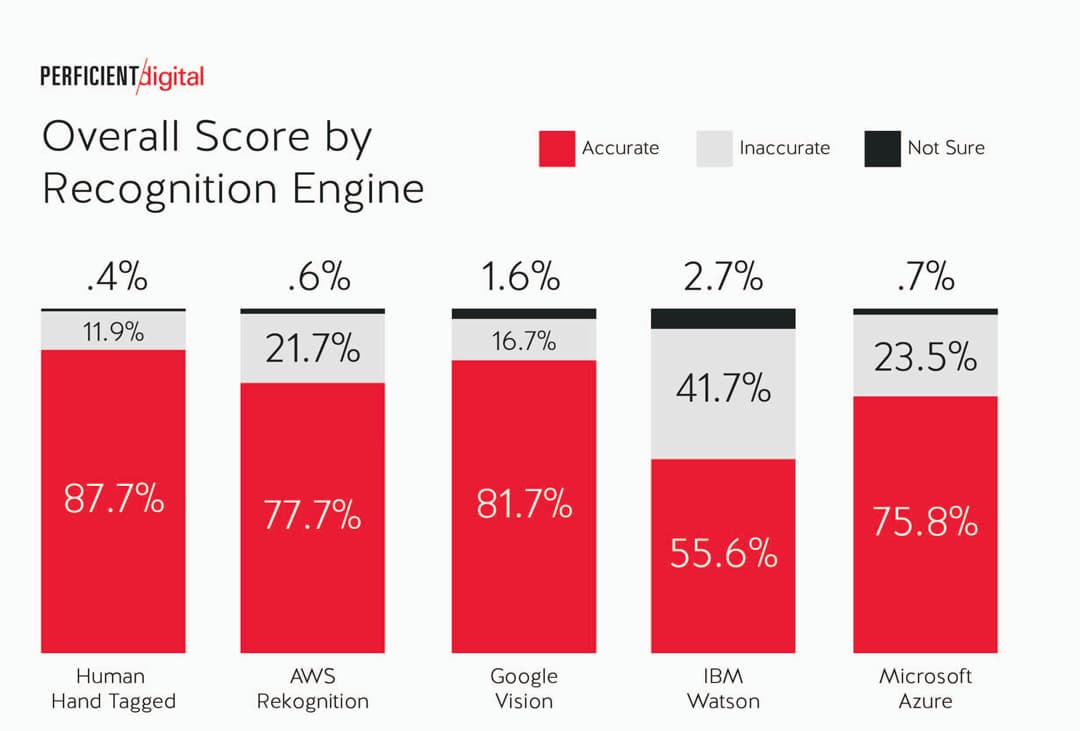
La gente de Perficient Digital ha publicado un interesante estudio que compara diferentes sistemas de reconocimiento de imágenes: Image Recognition Accuracy Study. Se comparan cuatro sistemas: Amazon AWS Rekognition, Google Vision, IBM Watson y Microsoft Azure Computer Vision, a los que se añade como control y comparación «humanos clasificando a mano». En total se utilizaron unas 500 imágenes para evaluar diversos parámetros.
En cuanto a precisión los humanos todavía estamos por delante, con una precisión del 88% seguidos de Google Vision (hace poco hablamos de su demo), Rekognition de Amazon, y los sistemas de Microsoft e IBM. Curiosamente tres de los cuatro sistemas clasifican con un 90% de confianza más de 5 etiquetas (que es hasta donde llegan los humanos)
La clasificación humana también es muy superior cuando se trata de describir una imagen (la siguiente en la lista es Google Vision). También hay alguna que otra curiosidad, como que Watson de IBM es la que tiene una mayor capacidad para distinguir y nombrar colores (términos como «jade», «azul metálico», «gris ceniza»… frente a «amarillo») y Amazon –apropiadamente– para reconocer términos relacionados con la vestimenta: camisetas, pantalones y ropa interior.
Relacionado:
- La demo de la API de Cloud Vision, la IA de aprendizaje automático de Google, resulta un poco inquietante cuando la pruebas con tus fotos
- El reconocimiento facial y de escenas de Amazon en la picota: Rekognition


via Microsiervos https://ift.tt/2GOlD2G
AmeriLuck 100W Equivalent LED Light Bulbs 1600+Lumens Non-Dimmable Standard A19 15W, CRI 80+, 3000K Warm Warm White, Omni-Directional - CNET
AmeriLuck 100W Equivalent LED Light Bulbs 1600+Lumens Non-Dimmable Standard A19 15W, CRI 80+, 3000K Warm Warm White, Omni-Directional
from CNET Smart Home https://ift.tt/2T53iDb
via IFTTT
from CNET Smart Home https://ift.tt/2T53iDb
via IFTTT
The best smart speakers for 2019 - CNET
With smart speakers from Amazon, Google and Apple as well as third-party products from the likes of Sonos, we can help you choose from all the exciting options.
from CNET https://ift.tt/2YiPU4e
via IFTTT
from CNET https://ift.tt/2YiPU4e
via IFTTT
Subscribe to:
Posts (Atom)